
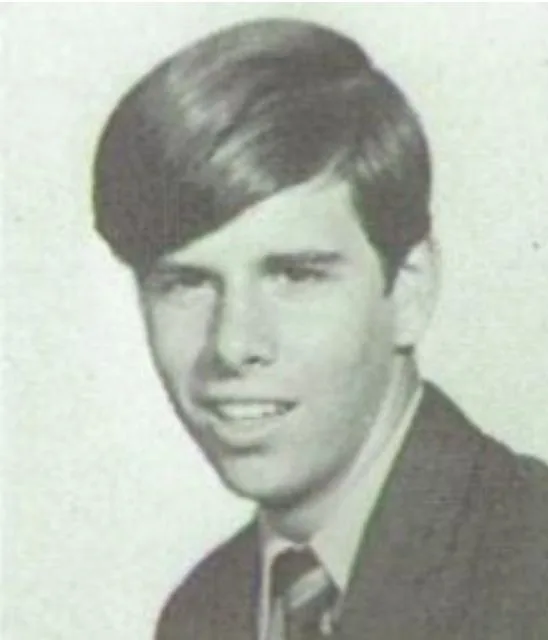
SALT LAKE CITY, UT — A newly created cold case unit in Utah has solved its first case by identifying a man whose body was found beneath a Riverdale overpass in 2012. Using forensic genetic genealogy, investigators determined the remains were those of Terry Richardson Chawk, who disappeared from Florida in 1977. The case had remained unresolved for more than 14 years after the discovery and decades after Chawk vanished. State Bureau of Investigation Agent Brian Davis said the identification finally gave Chawk’s family answers after years of uncertainty.
A Case With Few Leads
Investigators said the unidentified man had little with him when he was found, and there were no signs of foul play. Davis said there was “not a stitch” of identifying material to work from, beyond a few belongings that suggested he had been living in difficult circumstances. Those items included a UTA bus pass and a newspaper clipping. Tips from people who had met him pointed investigators toward Florida, and some remembered that he may have used the first name Terri. Others knew him as Coffee Bob. Even with those fragments, the case repeatedly stalled.
Davis spent years trying to connect the man to a name, including checking databases and following leads in Florida. His team uploaded the fingerprint to law enforcement systems and the DNA profile to the FBI’s Combined DNA Index System, but each effort ended without a match. Davis said the investigation was frustrating because the case seemed like one that should have been solvable sooner. He also tracked down people in Roy and Bountiful who had known the man and described him as kind, but they said he rarely spoke about his past.
New Unit, New Tools
The breakthrough came after Utah formed its new cold case unit and assigned Davis to lead it. The team includes Kathryn Moore, a full-time forensic investigative genetic genealogist, which investigators say is among the first such positions in the country. Moore joined in late 2025 and began revisiting unresolved cases with newer DNA methods. She said the unidentified man’s case stood out because of how much it meant to Davis and because it had already gone unanswered for so long. Working together, the team built an enhanced DNA profile and began mapping possible family connections.
That work required reconstructing a family tree through thousands of possible eighth-cousin links, a process far beyond older forms of DNA comparison. Moore said the newer approach does not require investigators to know who they are looking for before they start. Instead, it allows them to identify relatives and then trace common ancestors and descendants until they narrow in on the unknown person. The method uses the same kind of SNP testing found in consumer genealogy services such as Ancestry, 23andMe and MyHeritage.
The Match In June
The key break came in June, when a relative uploaded a DNA profile to FamilyTreeDNA and opted in to allow law enforcement access for investigative purposes. Davis said that single voluntary upload made the difference. Moore said the person was a much closer match than the team had been seeing before, somewhere in the second- to fourth-cousin range, which sharply reduced the search field. Investigators then focused on a family connection in Florida and confirmed the identity as Terry Richardson Chawk. Davis found Chawk’s brother, who submitted a DNA sample that verified the match.
Chawk had left home at a young age, and his family had not seen or heard from him in 47 years. Davis said the family spent years searching and even hired a private investigator after he disappeared. They learned he had lived in the Pacific Northwest, but because he had no major criminal history, his fingerprints were never in a system that could identify him. Chawk’s mother died in 2019 without finding out what happened to her son.
What The Case Means
Investigators say the case is a proof of concept for Utah’s new cold case unit and for forensic genetic genealogy more broadly. Davis said agencies can use only three DNA databases for these kinds of searches, and only when people have voluntarily opted in. Those databases are FamilyTreeDNA, GEDmatch and DNA Justice. He acknowledged that some people worry about privacy, but said the ability to choose whether to participate can be critical for families who still want answers. Moore said the technology has changed what investigators can do when they have no known suspect.
Utah currently has about 40 unidentified human remains cases and more than 250 unsolved homicides, and Davis believes genealogy tools could help with many of them. He said the goal is to solve as many of those cases as possible. Moore said the work is especially meaningful when it helps restore a name to someone who was loved and missed. For the family, the identification closed a chapter that had remained open since 1977, and for investigators, it showed that the new unit’s approach can produce results.